Understanding Thread Life Cycle and Thread States in Java are very important when you are working with Threads and programming for multithreaded environment. From our last tutorial, we can create a java thread class by implementing Runnable interface or by extending Thread class, but to start a java thread, we first have to create the Thread object and call it’s start() method to execute run() method as a thread.
Thread Life Cycle in Java
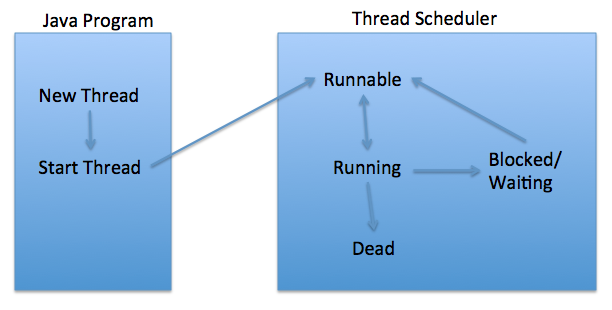
Below diagram shows different states of thread life cycle in java. We can create a thread in java and start it but how the thread states change from Runnable to Running to Blocked depends on the OS implementation of thread scheduler and java doesn’t have full control on that.
Matching infrastructure at centron
No hardware needed to follow along: ccloud³ VMs with full root access start at €3.11 per month, billed by the hour and ready in seconds. Rent a cloud server →
New
When we create a new Thread object using new operator, thread state is New Thread. At this point, thread is not alive and it’s a state internal to Java programming.
Runnable
When we call start() function on Thread object, it’s state is changed to Runnable. The control is given to Thread scheduler to finish it’s execution. Whether to run this thread instantly or keep it in runnable thread pool before running, depends on the OS implementation of thread scheduler.
Running
When thread is executing, it’s state is changed to Running. Thread scheduler picks one of the thread from the runnable thread pool and change it’s state to Running. Then CPU starts executing this thread. A thread can change state to Runnable, Dead or Blocked from running state depends on time slicing, thread completion of run() method or waiting for some resources.
Blocked/Waiting
A thread can be waiting for other thread to finish using thread join or it can be waiting for some resources to available. For example producer consumer problem or waiter notifier implementation or IO resources, then it’s state is changed to Waiting. Once the thread wait state is over, it’s state is changed to Runnable and it’s moved back to runnable thread pool.
Dead
Once the thread finished executing, it’s state is changed to Dead and it’s considered to be not alive. Above are the different states of thread. It’s good to know them and how thread changes it’s state. That’s all for thread life cycle in java.
Test your setup on ccloud³
Sign up for ccloud³ and receive €200 starting credit for your project.