KI
Billion-Dollar AI Investments: Is Germany Falling Behind?
The USA is pouring billions into AI while Germany struggles to keep up. Interview with Dominik Seucan, Head of Operation…
Artificial intelligence is transforming modern manufacturing. From predictive maintenance to digital twins — AI enables companies to increase productivity, reduce downtime, and optimize quality across the entire production process.
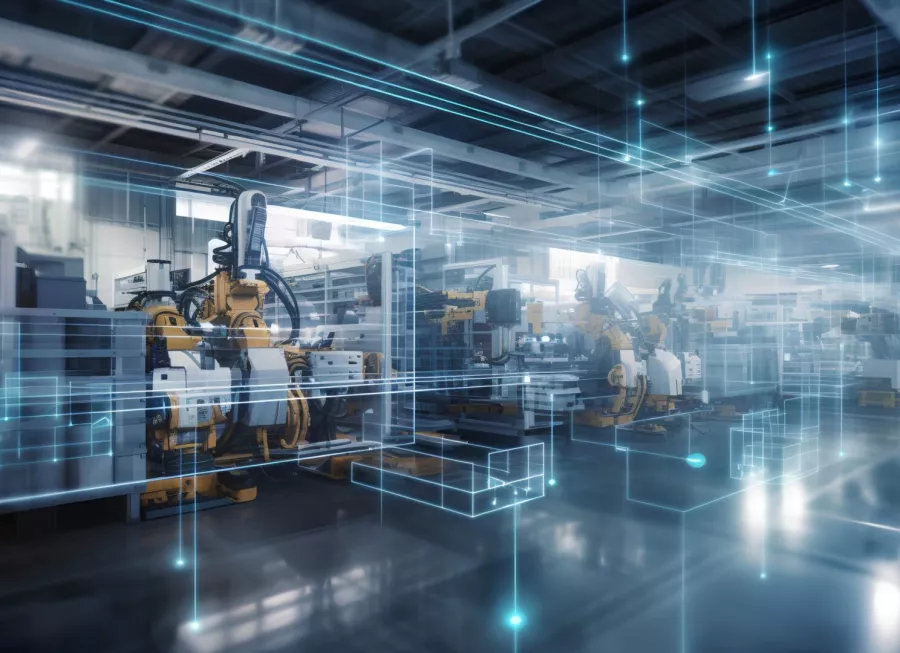
Computer vision enables automated analysis of images and videos to identify defects invisible to the human eye.
High-resolution cameras monitor each production step and provide real-time data on dimensions, alignment, and precision.
AI models learn from this data, detect anomalies early, and automatically trigger corrective actions.
This minimizes human error, improves quality assurance, and reduces waste.
Generative design uses algorithms to create thousands of design variations based on predefined parameters such as materials, production methods, and cost limits.
AI evaluates all possible configurations and identifies the most efficient and sustainable design options.
Manufacturers can iterate faster, shorten development cycles, and significantly increase innovation potential.
Integrating artificial intelligence with the Internet of Things (IoT) creates a self-optimizing production environment.
Connected machines continuously send operational data to the cloud.
AI systems analyze this information to detect inefficiencies, reorganize workflows, and even initiate automated recovery plans in case of failures.
The result: improved transparency, reduced downtime, and more agile manufacturing.
Instead of reacting to failures, predictive maintenance anticipates them.
AI models analyze sensor data and detect early indicators of wear or malfunction.
Maintenance can then be performed proactively — precisely when it’s needed.
This approach extends machine life, prevents costly downtime, and optimizes resource use.
Digital twins are virtual replicas of machines, systems, or entire production lines.
They combine real-time IoT data with simulation models to reflect physical performance.
By testing different operational scenarios virtually, companies can predict maintenance needs, improve energy efficiency, and enhance equipment utilization.
The result: a dynamic feedback loop between the physical and digital worlds.
Artificial intelligence is revolutionizing production through intelligent automation and data-driven optimization.
Companies that integrate AI into their processes benefit from higher productivity, cost savings, and more sustainable operations.
With centron’s Cloud GPUs and ccloud³ virtual environments, you can run demanding AI workloads securely and efficiently — directly from ISO 27001-certified data centers in Germany.
AI analyzes real-time data, predicts failures, and optimizes machine performance.
This leads to fewer interruptions, faster production cycles, and better resource utilization.
Computer vision automates quality inspection by identifying defects and deviations with high accuracy.
It helps manufacturers maintain consistent product quality and reduce waste.
Generative design uses AI algorithms to create and test multiple design options automatically.
This speeds up product development and improves performance while reducing material consumption.
Digital twins replicate physical systems virtually, allowing real-time monitoring and predictive analysis.
They help optimize performance, anticipate maintenance, and streamline decision-making.
centron provides high-performance Cloud GPUs and virtual machines for compute-intensive AI applications.
Our German data centers ensure maximum availability, security, and GDPR compliance for industrial workloads.
Source: eInfochips, Inc.
➤ Request your AI infrastructure consultation now
The USA is pouring billions into AI while Germany struggles to keep up. Interview with Dominik Seucan, Head of Operation…

Generative AI transforms data centers: GPU systems, sustainable energy, and security redefine performance, efficiency, and…
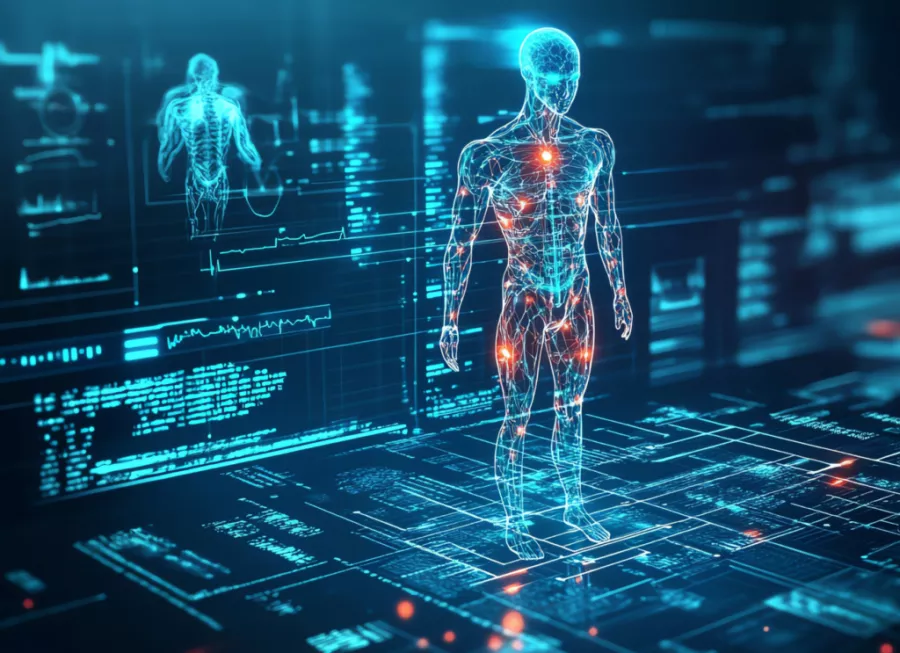
Artificial intelligence is revolutionizing the healthcare sector - from faster diagnoses to more efficient treatments.
Sign up and receive €200 credit at centron within your first 60 days.
This promotional offer applies to new accounts only. Available exclusively to businesses.